Inventory, valorisation and reintegration of traditional production technologies into the food production chain, from farm to table
In Croatia, as in most other countries in Europe and the world, food production, including animal husbandry, has gradually evolved and adapted to the agro-ecological, economic and social conditions, as well as to the habits and needs of consumers. Over the centuries, traditional agricultural production technologies (animal husbandry) have evolved, accumulating and selecting knowledge that has been passed down through generations, along with the rural way of life and traditional gastronomy culture. More recently, attention has been given to the need to preserve local breeds as genetic heritage, to optimise the conservation of functional ecosystems that support agricultural (livestock) production and to promote the interest of the local population, especially the younger generations, in actively participating in rural life and agricultural production. The focus is on the sustainability of this agricultural (livestock) production and its full social and economic integration into rural life.
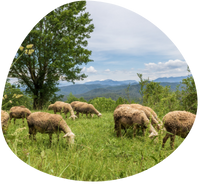
One of the significant problems we face is the loss of traditional knowledge that has been passed down through generations. The knowledge of traditional production technologies contains centuries of experience about agricultural (animal) production technologies, the functional conservation of agro-ecosystems (prevention of pasture succession, etc.), which directly preserves the biodiversity of the entire habitat, and protects local or traditional gastronomy as part of the identity of rural areas. Domestic animals, especially local breeds, are a very effective tool for pasture conservation of pastureland (landscape management).
In Croatia, a significant part of the genetic potential of domestic animals has been preserved, with special attention being paid to the preservation of 36 local domestic animal breeds. However, there is a noticeable problem of loss of traditional knowledge about the technologies used in traditional agricultural production, the methods of breeding and utilisation of local breeds and certain traditional food products.
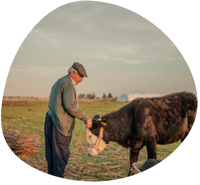
It is therefore necessary to approach the inventory, valorisation and partial reintegration of traditional sustainable production technologies, especially those that are part of the identity of rural areas. The traditional knowledge mentioned is partly found in literature, but can also be accessed through contact with the rural population, especially with older people who were directly involved in such activities in their youth and still remember them. Therefore, interviews with such population groups would be a useful tool to inventory traditional knowledge and production technologies. After the inventory of traditional production technologies, their valorisation should be carried out and for those that are considered justified, a way should be found for their reintegration into current production systems and technologies.
Another important objective related to traditional technologies for the production of agricultural and animal products should focus on local gastronomy, which should reconcile the gastronomic tradition of a given territory with the modernised habits and needs of today’s consumers. Local gastronomy has a significant potential to promote local agriculture and its products and to give a certain territory a recognisable value that is highly appreciated today. Well-designed agritourism, for example, should be based on local gastronomy and local products, because visitors want to get to know a particular area through the gastronomic experience of the region or through authentic local cuisine with ingredients from the region.
We believe that in Croatia and other countries it is essential to preserve traditional production technologies and traditional products. In order to achieve this goal, it is necessary to make a systematic inventory of traditional production technologies and products of traditional gastronomy, valorise them in a modern way and reintegrate them into existing production technologies in a way that is economically, ecologically, socially and culturally acceptable and increases the recognition value (brand) of the rural area. In Croatia, considerable efforts have been made to preserve agricultural genetic resources and some traditional products are well positioned on the market. However, traditional knowledge has been largely neglected, although it involves a high degree of innovation in production technologies, processing of primary agricultural products and local gastronomy. Inventorying, valorising and reintegrating traditional production technologies and products into the food chain, from farm to table, can be the “key” to revitalising parts of the countryside.
Keywords: tradition, food production, technologies, traditional gastronomy, local food